
In most ways, working on a farm can be a great job. You get to work with animals all day in the fresh air, and although it’s hard work, there’s a certain calm, mindful repetition to it that feels good for the soul.

That said, it requires a lot of focus. There’s a great deal of responsibility with this role, including a wide variety of potential dangers you face as you go about your day-to-day. In this article, you’ll learn about six of the most common injuries that occur on a farm and how you can prevent them.
- Animal-related Injuries
Animal-related injuries are far more common than you might initially think. Whether it’s bites, kicks, or an animal falling on top of you, there are a number of situations where the large, powerful animals on a farm can cause you harm.
One of the main aspects of avoiding these injuries is to learn and understand the behavior and body language of each type of animal you work with – knowing when to back off when the signs are clear. You should also always approach any animal calmly, without making a lot of noise, wear protective clothing (gloves are particularly important), and keep exits in clear sight at all times.
- Falls
Falls are one of the most common types of injuries in any industry, but the precarious conditions associated with farm work make the risk higher.
First and foremost, be sure you’re always wearing fit-for-purpose, high-quality footwear with good grip: without this, it’s far too easy to slip on wet mud or pieces of wood. You should also make sure you or your employer installs guard rails around risky, elevated areas like barns, and always avoid running or rushing about in these places.
- Accidents with Machinery
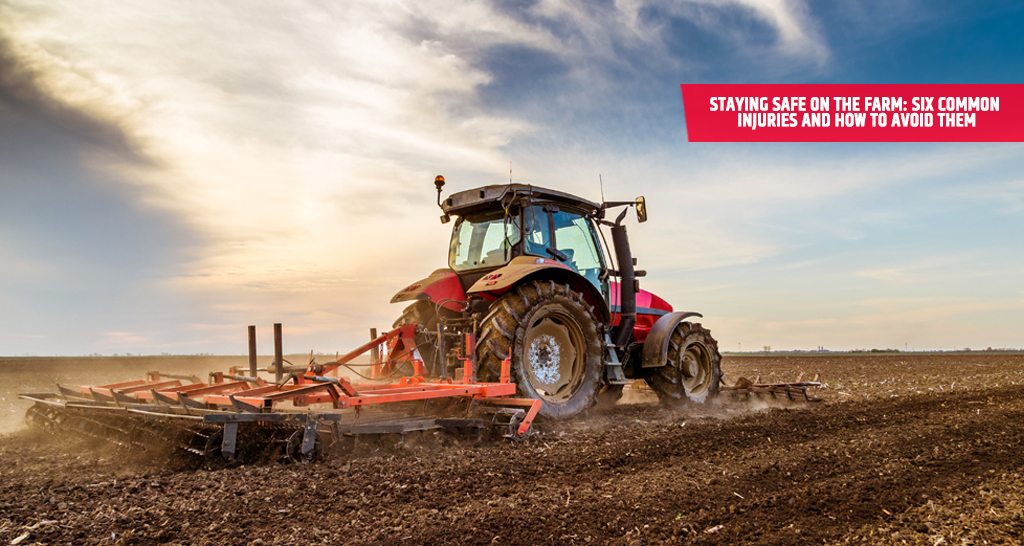
Naturally, heavy machinery makes for one of the riskiest elements of working on a farm, whether that be due to the risk involved with large pieces of equipment like tractors and combine harvesters, or small handheld power tools like circular saws. Always make sure you’re crystal clear on how to operate these bits of gear, and never try to clean or fix a tool if it’s turned on.
The farm should also display appropriate signage to prevent other employees from wandering into an area when heavy machinery is in operation.
- Heat and Dehydration
Depending on the sort of task you’re performing, farm work can be incredibly taxing on the body – especially when you’re working in the blistering heat. Heat stroke, dehydration, and general exhaustion occur at a relatively high rate in the farming industry, so you need to do all you can to mitigate the danger.
This includes carrying plenty of water with you at all times, taking regular breaks in the shade, and always being mindful of how long you’ve been working regardless of breaks (sunscreen is also essential!).
One of the best ways to ensure you stay safe is to have a break schedule you don’t deviate from.
- Chemical Exposure
There are a lot of dangerous chemicals used daily on a working farm, so it’s crucial to be aware of what you’re dealing with and protect yourself from any side effects.
When handling chemicals, always wear appropriate gloves, goggles, and a mask: carefully read the directions that come with the product you’re using, and use the PPE the manufacturer recommends. You should also make sure these chemicals are stored away correctly in a safe area, and that the cap or lid is replaced after use – chemical leaks can cause fires or even explosions.
In the event that you get injured from a chemical product, you’ll need to have provisions ready, such as a first aid kit and eyewash station.
- Electrical Hazards
Electrical hazards are everywhere on a farm given the large array of high-voltage equipment you’ll be required to use. Be sure to check that the piece of equipment you’re about to use isn’t damaged, such as exhibiting frayed wires or exposed components.
You should also do your best to not get any piece of equipment wet that isn’t waterproof, and if you’re riding a vehicle, steer clear of any nearby power lines.
Wrapping Up
Farm injuries may be common, but providing you take the steps outlined above, you should be in the best position possible to keep yourself and others safe. Finally, in the unfortunate event that you do sustain a personal injury from a farm accident, it’s important to contact a personal injury lawyer as soon as possible to see where you stand. Stay safe!