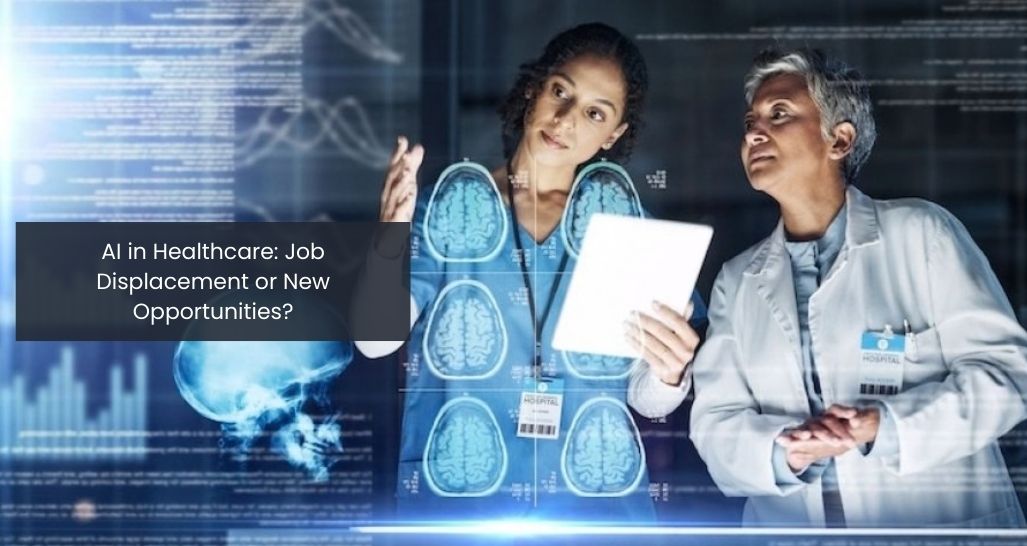

The rise of artificial intelligence (AI) has sparked widespread debate about its potential impact on employment across various sectors, including healthcare. While some fear that AI will lead to significant job losses, particularly in roles traditionally considered secure, there is also a strong argument that AI could create new opportunities.

The Current Landscape of AI in Healthcare
AI is already making significant strides in healthcare, contributing to improved efficiency and decision-making. Applications such as radiology and pathology reporting are becoming increasingly common, enabling faster and more accurate diagnoses. For example, AI algorithms can analyse medical images to identify anomalies, thus assisting radiologists in making informed decisions. Additionally, AI is being integrated into clinical decision support tools that help identify patients at risk of deteriorating health. These tools can automate processes like the National Early Warning Score system, which assesses patient risk levels in real-time.
Despite these advancements, the integration of AI in healthcare is likely to be gradual. Many healthcare professionals remain sceptical of computer-based decision-making, preferring human oversight in critical areas. Initially, AI systems will serve as adjuncts to human decision-making, enhancing rather than replacing the roles of healthcare workers. For instance, generative AI could take on menial tasks such as writing discharge summaries, thereby alleviating some of the administrative burdens faced by junior doctors.
The Potential for Job Creation
Contrary to the narrative of job loss, the introduction of AI in healthcare presents opportunities for job creation. As AI systems become more prevalent, there will be a growing need for skilled professionals to develop, validate, and oversee these technologies. Clinicians with expertise in specific medical fields will be essential for ensuring that AI systems are designed effectively and validated appropriately. This process often requires manual tagging of clinical data, such as images and free text, to train algorithms accurately. Such tasks will not only create new roles but may also lead to ongoing employment opportunities for clinicians, as continuous oversight and updates will be necessary.
In addition to clinical roles, new executive positions are emerging in healthcare organisations to manage AI implementation. The role of Chief AI Officer, for instance, is gaining traction in hospitals, particularly in the United States. These leaders are responsible for integrating AI systems into healthcare practices, ensuring that they align with clinical needs and ethical standards. Institutions like the Mayo Clinic and the University of California San Diego Health have already appointed doctors to these positions, highlighting the intersection of clinical expertise and technological advancement.
Moreover, the growth of AI may lead to the development of new subspecialties focused on data-driven medicine and the ethical implications of AI in healthcare. This shift could foster a new generation of healthcare professionals who are adept at navigating the complexities of AI technologies while maintaining the human touch that is crucial in medicine.
The Role of AI in Support Clinics
In specialised drug and alcohol detoxification clinics, AI has the potential to enhance treatment outcomes significantly. By analysing patient data, AI can help identify individuals at higher risk of relapse and tailor treatment plans accordingly. Predictive analytics can assist clinicians in making more informed decisions about interventions, ultimately improving patient care and success rates.
Additionally, AI can streamline administrative processes within these clinics, allowing healthcare professionals to focus more on patient interactions and less on paperwork. For instance, AI-generated reports can provide insights into patient progress and treatment efficacy, enabling clinicians to adjust approaches in real-time. This not only improves the quality of care but also creates a more efficient workflow, allowing staff to devote more time to supporting patients through their recovery journeys.
Embracing a Future with AI
While concerns about job displacement due to AI are valid, it is essential to recognise the potential for job creation and enhancement within healthcare. The human element of medicine—empathy, intuition, and interpersonal communication—remains irreplaceable by AI. As such, the future of healthcare is likely to involve a symbiotic relationship between AI technologies and healthcare professionals, where AI alleviates administrative burdens and enhances clinical decision-making.
In conclusion, rather than fearing job losses, healthcare professionals should embrace the opportunities that AI presents. By reducing menial tasks and improving treatment efficacy, AI can free up clinicians to engage more meaningfully with patients. As the landscape of healthcare continues to evolve, it is crucial to remain adaptable and open to the possibilities that AI brings, ultimately leading to a more efficient and compassionate healthcare system.