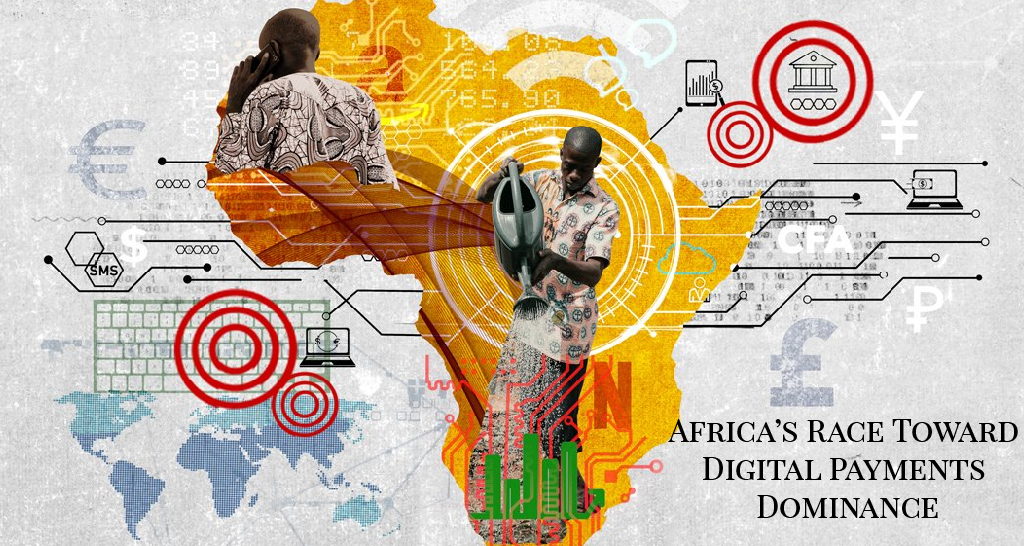

Right now, a quiet revolution is underway in Africa’s financial industry. In the past, the continent was known for economies that relied mostly on cash transactions and had limited access to financial services. Now, it is quickly becoming one of the most dynamic digital payments regions in the world. More people throughout the continent are using digital payments. Innovation, need, and a population that is very mobile-first and skipping established financial systems are driving Africa’s push to become a leader in digital payments. This group of people is likewise going ahead of traditional banking institutions. Mobile wallets and platforms that make it easier to use financial technology across borders are some of the new ideas that are driving this race. This is why this is happening.

Throughout history, millions of Africans have not been able to use official financial services. This basic truth is what is making the change happen. Money had trouble getting around because of the long distances to bank branches, high fees, and strict rules. Currency could not overcome these problems. Digital payments, on the other hand, were a better option. They worked well with the fact that mobile phones were becoming more popular in Africa and that the continent had a lot of young people. Smartphones and feature phones are becoming increasingly important as ways to get into business, move up the economic ladder, and take part in the economy. This is because feature phones cost less than smartphones.
You can follow the history of mobile money all the way back to when it first started. M-Pesa and other such programs have changed the way individuals do their daily business by letting them send, receive, and hold money without needing a bank account. At the start, it was meant to fix problems at home, but over time, it became a model for the whole continent. Because mobile wallets are so widely used, people who reside in both cities and rural areas have already started using digital payment methods in their daily lives. You may use mobile wallets to pay for a lot of things, such as school fees, energy bills, transport costs, and even government services.
As more people started using them, entrepreneurs in the financial technology sector took advantage of the potential to create increasingly complicated payment systems. The goal of startups like Flutterwave and Paystack is to help small businesses, internet merchants, and international trade. This was the main reason they were set up. These platforms made it easier to handle payments, which meant that African firms could take payments from both local and foreign consumers without any problems. By doing this, they helped open the continent’s digital economy and connect African businesses to markets around the world. They also helped make that relationship happen.
The growth of e-commerce and social commerce in Africa is one of the most important things that has led to the huge rise in digital payments on the continent. More small businesses are using social media and messaging apps to sell their goods and services. These businesses are also relying more on the ease of digital payments to complete their transactions. One of the good things that will happen to informal merchants and micro-entrepreneurs because of this change is that they will need less cash, feel safer, and have transaction histories that they can use to get loans later. Digital payments are no longer merely convenient; they are becoming tools that help people with their financial identification and economic inclusion. This is a big difference from what was said before.
Another important frontier is the movement of money across national borders. Because Africa has a lot of different currencies and regulatory systems, it is still one of the most fragmented payment markets in the world. Sending money across African countries has traditionally been a slow and costly process. This has always been the case. Fintech platforms are currently challenging this reality because they allow for faster and cheaper money transfers. This new achievement is very important for business within Africa, which is growing because of attempts to bring the continent’s economies together. To help Africa’s market become more connected, it is becoming increasingly important to keep digital payments running smoothly as the backbone of the infrastructure.
Governments and regulatory bodies are also becoming more important in the process of creating the digital payments landscape. To stimulate innovation and lower risk, several nations are putting money into national payment switches, real-time settlement systems, and regulatory sandbox initiatives. This is being done to try to reach both goals at the same time. The public sector’s use of blockchain technology for things like paying taxes and giving out social welfare payments is speeding up trust and large-scale use. Governments that do business online usually make digital payments the default option instead of marketing them as an alternative.
But Africa’s current fight for supremacy is not without its problems. Some of the problems that are still going on are bad infrastructure, unreliable internet connectivity, possible cybersecurity threats, and inconsistent enforcement of laws. There are also other dangers to cybersecurity that make things harder. It is vital to keep spending money on educating consumers because there is a big difference in how digitally literate people are. On the other hand, these problems are encouraging inventiveness at the local level instead of stopping progress. Companies in the financial technology sector are coming up with solutions that can work offline, on cheap devices, and in regulatory environments that are not very well organised. This shows how Africa approaches problem-solving.