
Waterfront property looks calm and inviting, yet change happens quietly beneath the surface. Small waves, shifting tides, and seasonal storms slowly reshape the shoreline. Many owners notice the impact only after the soil starts disappearing or the water reaches closer than expected. Risk along coastal edges is growing. According to NOAA , nuisance flooding events along U.S. coastlines have more than doubled since the 1980s, driven by rising seas and stronger storms

This reality makes long-term planning essential. A seawall helps reduce erosion and limits wave impact on vulnerable land. Understanding how a seawall works allows property owners to make informed decisions. This guide explains the basics, key considerations, and practical steps involved, helping owners protect their land with confidence and clarity.
What Is Seawall Construction?
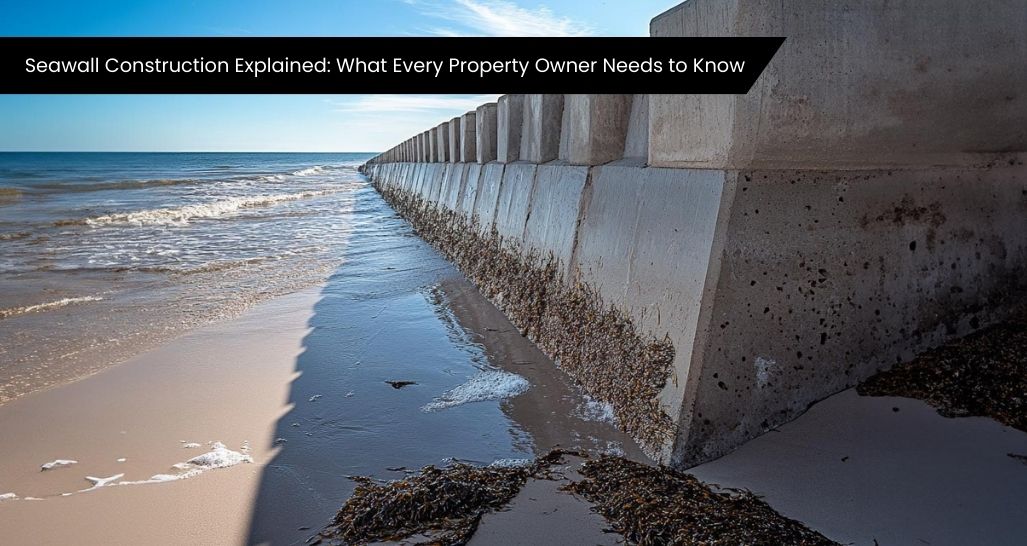
This type of shoreline protection involves building a strong wall along the water’s edge. The goal is to hold soil in place while blocking wave impact. These structures prevent land from washing away during storms or high tides. They also reduce flooding risks near buildings and outdoor areas.
The design depends on location, water movement, and soil conditions. Some walls are tall and vertical, while others slope slightly. Materials vary based on strength and durability needs. A well-built structure blends safety with function. It supports the land behind it while standing up to repeated water pressure. For many waterfront owners, this approach creates a reliable line of defense.
Why Seawalls Matter for Property Protection
Seawalls play a critical role in protecting properties that sit near water. Over time, waves, tides, and storms slowly eat away at soil and shoreline edges. This erosion can weaken foundations and reduce usable land. Flooding adds another layer of risk, especially during heavy storms or rising tides. A properly built seawall acts as a strong barrier. It absorbs wave energy and redirects water away from vulnerable areas. This protection helps preserve both the structure and the surrounding landscape.
For property owners planning long-term protection, working with experienced professionals makes a difference. Companies like ICON Grading & Construction focus on seawall construction that accounts for local water movement, soil conditions, and property layout. This thoughtful approach helps reduce future repairs and unexpected damage. When a seawall is designed correctly, it supports stability year after year. It also gives owners peace of mind, knowing their investment is better protected against changing coastal conditions.
Common Types of Seawalls
Several wall designs serve different environments and property needs. Each type offers specific benefits based on location and water behavior. Understanding these options helps owners choose wisely.
Common designs include:
- Concrete walls that provide strong, long-lasting support
- Steel or vinyl sheet piling for tight or narrow spaces
- Gravity walls that rely on weight for stability
- Cantilever designs that use reinforced structure for strength
Each option suits certain soil and wave conditions. A professional assessment determines which style performs best. The right choice balances durability, appearance, and long-term performance.
How the Construction Process Works
Every project begins with a site inspection. Specialists study soil strength, water flow, and shoreline shape. This step ensures the design fits the environment. Next comes planning, where materials and dimensions are finalized. Permits are also secured during this phase.
Installation follows a clear sequence. Crews prepare the site and place support elements first. The wall is then installed and reinforced. Final steps include backfilling and surface finishing. Timelines vary based on size and weather conditions. Clear planning helps avoid delays and ensures a smooth process from start to finish.
Cost Factors Property Owners Should Know
Project costs vary widely based on several factors. Wall length and height play a major role. Material choice also affects pricing. Stronger materials usually last longer but cost more upfront.
Other factors include site access and equipment needs. Difficult locations require specialized tools. Labor costs differ based on project complexity. Long-term value matters as much as initial expense. A durable structure reduces repair needs later. Smart budgeting focuses on performance and lifespan rather than short-term savings.
Key Mistakes Property Owners Should Avoid
Some mistakes can reduce effectiveness or raise costs later. Skipping proper planning leads to design issues. Ignoring soil conditions can cause early failure. Choosing materials without expert advice also increases risk.
Avoid these common errors:
- Rushing the decision process
- Focusing only on price
- Ignoring maintenance needs
- Hiring inexperienced contractors
Careful planning prevents costly fixes. Asking the right questions early saves time and money. A thoughtful approach leads to better results and long-term confidence.
Conclusion
Protecting waterfront property requires informed decisions and careful planning. Understanding how shoreline barriers work helps owners avoid preventable damage. From choosing the right design to planning for maintenance, every step matters. Clear expectations lead to better outcomes and lasting stability. With the right guidance and preparation, property owners can safeguard their land confidently. A well-planned approach supports safety, usability, and peace of mind for years ahead.