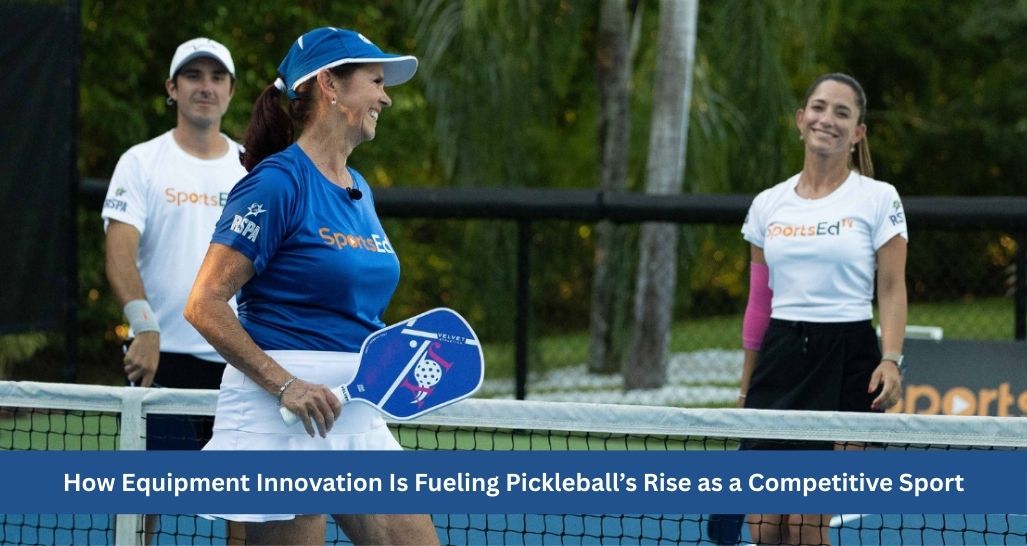

Pickleball’s rise has caught even longtime observers off guard. Courts are full before the sun comes up, tournament fields keep expanding, and the pace of play gets sharper by the season. What once felt relaxed now asks more from players, where quicker hands, tighter angles, and smaller margins decide points that used to slip by unnoticed.

That shift has changed how the sport is played at every level. Longer rallies reward control over brute force. Soft hands at the net matter as much as baseline pace. Decisions happen in fractions of a second, and winning often comes down to repeatability rather than flair.
As competition intensifies, pickleball has followed a familiar arc seen across established sports. Better players raise the standard, and the equipment they rely on has to keep up.
The Athletic Demands of Modern Pickleball
The idea that pickleball is slow falls apart once the pace picks up. At higher levels, points are decided in tight spaces, often within a few feet of the net. Reaction time matters. So does balance, footwork, and the ability to reset a rally when a point starts to slip.
Power rarely carries a match by itself. Players who swing for winners on every ball tend to leak errors. Control wins more points than raw pace. Soft drops that barely clear the tape, compact volleys that stay low, and well-placed drives that apply pressure without overreaching all demand touch and discipline.
There is also a physical cost that does not get much attention. Long dink exchanges wear on forearms and shoulders. Quick lateral movements punish lazy footwork. Competitive matches ask for sustained focus and stamina in ways that surprise players who expect a lighter version of tennis or ping-pong.
As the skill ceiling rises, so does the need for equipment that can keep pace with how quickly points unfold. Precision, feel, and forgiveness have shifted from nice extras to baseline requirements.
How Paddle Technology Has Changed the Way Pickleball Is Played
The modern pickleball paddle looks nothing like the early versions that helped launch the game. Materials have improved, cores respond more predictably, and surface textures influence spin and touch in noticeable ways. Those changes have reshaped how points are built and defended.
Control is the whole point. A paddle that takes the sting off hard shots buys players time to reset when a rally turns messy. A dependable sweet spot keeps the ball from spraying off the edge when the hands speed up at the kitchen. The way the face feels on contact can decide whether a drop dies where it should or hangs long enough to get punished.
That is where purpose-built gear starts to matter. Pickleball Nation’s Engage pickleball paddles reflect how manufacturers have responded to the sport’s faster, sharper evolution, prioritizing stability, touch, and consistent feedback over chasing maximum pop. When a paddle behaves the same way late in a rally as it does on the opening shot, players trust their decisions and stay patient under pressure.
Todd Skezas, CEO of Pickleball Nation, has noted that as pickleball speeds up, players depend more on reliability and feel than raw power. In tight exchanges at the net, consistency becomes the difference between extending a rally and giving a point away. Paddle design has followed that reality, shifting toward control-first performance that holds up when points get chaotic.
Innovation still operates within limits. Competitive balance depends on clear boundaries, which is why equipment development follows defined rules. Those boundaries are set by official paddle standards that govern materials, surface properties, and construction details. The aim is to allow progress without changing the character of the sport.
Together, technology and regulation have pushed pickleball toward a more refined style of play. Rallies last longer. Mistakes are punished faster. Execution matters more than ever. The paddle has become a precision tool, shaping how the modern game is played at every competitive level.
Equipment Innovation and the Legitimization of Pickleball
Every sport reaches a point where talent outgrows the tools. Pickleball is there now. When rallies speed up, and placement becomes surgical, passable equipment stops being enough. Players want gear they can trust, and that demand has pushed the sport toward a more serious competitive identity.
Better equipment changes who sticks around. Athletes coming from tennis, racquetball, or ping-pong judge a sport quickly by how cleanly it plays. They notice how true the ball comes off the face, how predictable touch shots feel, and how much control they have when a point turns chaotic at the kitchen line. When the gear supports that level of precision, the sport feels legitimate and worth mastering.
It also raises the baseline for everyone else. As performance paddles become more common, simple placement no longer wins easy points. Players develop fuller games. Resets improve. Counters get sharper. Drops carry more disguise. The equipment does not replace skill, but it rewards it, and that shift changes how the sport looks from the outside.
There is a cultural signal here as well. Equipment innovation reflects investment. It tells players, sponsors, and organizers that pickleball is building structure and standards, not drifting on novelty.
What the Future of Competitive Pickleball Looks Like
Competitive pickleball is still defining itself, but the direction is clear. Matches are faster. Margins are thinner. Players arrive with higher expectations of themselves and the tools they use. The sport rewards patience, precision, and adaptability, which keeps pulling in athletes who want something demanding.
As leagues expand and tournaments deepen, preparation starts to resemble what is expected in more established sports. Training time increases. Film study becomes useful. Equipment choices become intentional. The paddle shapes how aggressively players defend the kitchen and how confidently they attack short returns.
Early equipment choices can quietly shape how a player develops, especially once rallies speed up and touch shots no longer feel optional. The right pickleball equipment for beginners can improve contact and control, so progress comes from better decisions rather than lucky bounces.
Pickleball has reached the point where showing up matters less than how well you play. Accessibility draws people in. Competition keeps them invested. The entry point remains welcoming, but staying competitive requires focus, repetition, and equipment that does not hinder progress.
The sport is still young, and its ceiling has not fully come into view. What is already clear is that innovation has become part of pickleball’s competitive backbone.
Conclusion
Pickleball’s transformation did not come from a single moment or a marketing push. It came from pressure. Better players forced the game to mature. Faster hands, tighter margins, and longer rallies demanded tools that could keep up, and equipment innovation answered that demand quietly and effectively.
The result is a sport that feels sharper every season. Points are built with intention. Mistakes carry consequences. Skill reveals itself over time. That evolution has helped pickleball move past its purely recreational reputation and settle into a competitive identity.
As the talent pool deepens and expectations continue to rise, innovation will remain part of the sport’s foundation, shaping smarter play, tougher matches, and a ceiling that’s still rising.