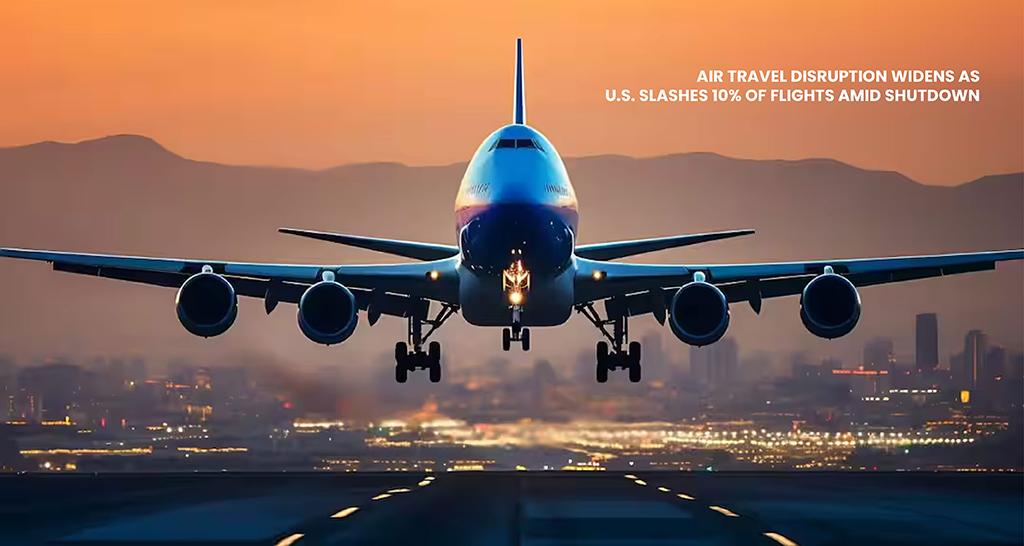

The U.S. government has instructed airlines to cut back their flight operations by 10% at major airports due to the ongoing federal shutdown, which is causing significant disruptions to essential aviation services. The Federal Aviation Administration (FAA) has confirmed that this change will be implemented this week at 40 busy airports, pointing to increasing safety and staffing issues.

The unprecedented decision comes as the shutdown, now entering its fifth week, continues to take a toll on thousands of air-traffic controllers, safety inspectors, and Transportation Security Administration (TSA) officers. Many of them are working without pay, which is leading to increased fatigue and staffing shortages that are starting to impact operational safety standards.
According to senior officials, the FAA has carried out an internal safety review that uncovered “unsustainable pressure” on essential operations. To help manage the workload and maintain safe operations until government funding is back on track, a 10% reduction in flights is being put into effect. While international flights are expected to remain largely unaffected, domestic air traffic is likely to face significant disruptions, particularly in major hubs like New York, Washington D.C., Atlanta, Chicago, Dallas, and Los Angeles
The cuts are being rolled out gradually, starting with a 4% reduction this week, then moving to 6% by midweek, and finally hitting 10% by the week’s end. Analysts predict that over 1,800 flights might be canceled, impacting more than 250,000 passengers each day. Airlines have been instructed to adjust their schedules, focus on long-haul routes, and tweak regional services to keep things from getting too chaotic.
Airlines are racing to handle the aftermath, providing flexible rebooking options, refunds, and flight credits for travelers who have been affected. They’ve also adjusted their aircraft capacity to keep vital routes running, but experts caution that if the shutdown continues, disruptions might carry over into the upcoming holiday season.
The economic fallout is becoming increasingly significant. The airline industry stands out as one of the most affected by the ongoing political deadlock, with every week of the shutdown racking up billions in lost productivity and a dip in consumer spending. Airport vendors, logistics partners, and tourism operators are also feeling the pinch as passenger numbers continue to drop.
Travelers are being advised to keep a close eye on flight updates, arrive at the airport early, and brace for potential delays. This is due to a reduction in air-traffic control staffing and longer security lines. Smaller regional flights are likely to face the most cancellations, while larger airports might see longer wait times and some changes to their schedules.
Transportation officials have made it clear that their decision is based solely on safety concerns, not political motives. Still, the fallout from the shutdown is putting increasing pressure on both Congress and the White House to come to a funding agreement. Industry leaders are sounding the alarm, warning that if this disruption continues, it could seriously harm the reliability of U.S. aviation and our competitiveness on the global stage.
As the shutdown continues, the reduction in flights is becoming one of the most noticeable impacts, turning an already tense political standoff into a logistical nightmare for millions of American travelers and the broader economy.